

Key Takeaways
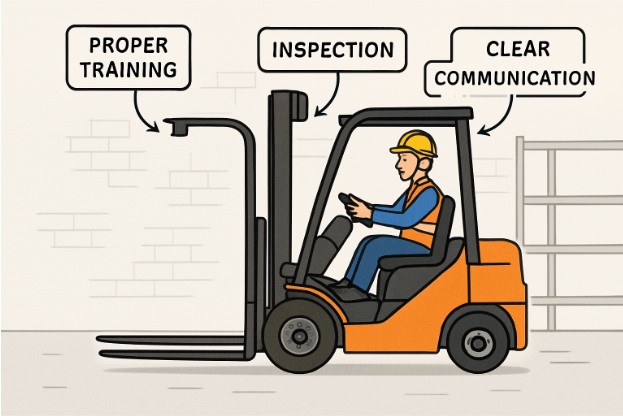
- Operator training and certification are the bedrock of workplace forklift safety.
- Routine inspections help identify and preempt mechanical failures.
- Respecting load limits and handling materials properly are crucial to preventing accidents.
- Clear lines of sight and effective communication protect both operators and pedestrians.
- Modern technology, such as impact detection, enhances situational awareness and response times.
Table of Contents
- Introduction
- Comprehensive Operator Training
- Regular Pre-Operation Inspections
- Adhering to Load Capacity Guidelines
- Maintaining Clear Visibility and Communication
- Implementing Technological Advancements
- Conclusion
Forklifts are the backbone of logistics, manufacturing, and warehousing, enabling businesses to handle heavy loads with minimal effort. Their incredible utility, however, comes hand in hand with significant safety risks. It’s crucial to recognize that maintaining a secure environment is more than a compliance issue—it’s about safeguarding lives and ensuring seamless operations. Obtaining proper forklift certification is a foundational step for anyone entrusted with operating these powerful machines.
Workplaces that adopt a comprehensive approach to forklift safety tend to experience fewer accidents, higher productivity, and better morale. Both employers and operators play vital roles in upholding high safety standards. Beyond simply following regulations, a well-informed workforce is empowered to prevent incidents rather than merely respond to them actively.
Comprehensive Operator Training
Proper training underpins every aspect of forklift safety. The Occupational Safety and Health Administration (OSHA) attributes a significant reduction in workplace accidents to robust training initiatives. Forklift operators are required not only to learn the mechanical controls of the equipment but also the key principles behind safe maneuvering, risk identification, and emergency procedures. Effective training programs combine in-class theory with hands-on practice, ensuring that every operator receives real-world experience before taking the wheel.
Beyond initial certification, ongoing education is indispensable. Refresher courses, scheduled at regular intervals or when new equipment is introduced, reinforce essential practices and help eliminate bad habits that might develop over time. Training also empowers operators to quickly adapt to evolving safety standards and technological improvements. According to OSHA guidelines, regular recertification is essential for maintaining continued safety compliance and protecting workers.
Regular Pre-Operation Inspections
Each forklift must undergo a comprehensive inspection before use. This includes brakes, tires, steering mechanisms, forks, and warning devices like horns and lights. Minor issues, if left unnoticed, can escalate into serious malfunctions, putting both operators and nearby workers at risk. The Department of Labor reports that these inspections are critical in identifying leaks, loose bolts, or hydraulic issues that could spell disaster on the job floor.
Adopting a culture where pre-operation checks are standardized and documented allows workplaces to catch mechanical problems early. These checks protect not only people but also the machinery itself, thereby prolonging the service life of a critical business asset. Guidance on thorough daily inspections can be found in the recommendations of renowned safety organizations.
Adhering to Load Capacity Guidelines
Overloading remains among the top contributors to forklift-related accidents, often resulting in tip-overs, mechanical failures, or dropped loads. Every forklift comes with a manufacturer-supplied load capacity chart; ignoring these guidelines greatly increases the risk to operators and bystanders. Proper load distribution across the forks and securement of materials prevent unexpected shifts that could destabilize the forklift mid-operation.
The National Institute for Occupational Safety and Health (NIOSH) emphasizes the importance of reading and following load capacity plates. Failing to do so not only endangers lives but can also result in costly equipment repairs. This simple practice can reduce the risk of accidents related to structural damage and operator error.
Maintaining Clear Visibility and Communication
Visibility is often compromised in busy or tightly spaced operating environments. To mitigate these risks, adding mirrors or employing spotters can prove invaluable. In scenarios fraught with blind spots or heavy foot traffic, workers benefit immensely from clearly established hand signals or radio communication protocols.
Establishing communication practices not only prevents collision risks but also ensures a shared understanding between forklift operators and nearby employees. The American Society of Safety Professionals highlights that workplaces with deliberate, standardized communication measures see a measurable drop in forklift-related incidents. High-noise operations, especially those involving critical moments, benefit significantly from two-way radios, which enable quick, precise, and reliable exchanges.
Implementing Technological Advancements
Emerging technologies are making a substantial difference in industrial safety outcomes. Low-power wireless impact detection systems, for example, allow real-time tracking and immediate response if a forklift encounters an obstacle or collision. By continually monitoring movement and impact, these innovations foster proactive responses rather than reactive clean-up after an accident has already occurred.
Other advancements, such as automated alerts, machine telematics, and digital checklists, provide additional layers of control. These integrated solutions not only make it easier for managers to maintain compliance records but also empower operators by giving them access to up-to-date information about their equipment’s status and operational risks.
Conclusion
Forklift safety is a shared responsibility, blending rigorous training, consistent inspection, careful operation, and open communication. By embedding modern technology and a prevention-first mindset into daily routines, workplaces safeguard their teams while achieving operational excellence. Take proactive steps—invest in highly effective training, never skip on pre-checks, respect load limitations, and utilize every available tool to maximize visibility and communication. By doing so, every organization can create a safer and more productive workplace for all involved.